In this article4 sections
How do people use YouTube without Premium?
A few days ago, a problem with my YouTube Premium subscription briefly took away the features I had come to rely on. Almost immediately, I caught myself asking a rather ordinary question: how do people use YouTube without Premium?
It was not just the advertising, although there was plenty of it. I would start listening, switch to another app to reply to a message, and the audio would stop. Lock the phone: silence. Try to do something else while listening: another restriction.
That made me think about the business model. Here is something useful. You may use it for free, but if you want fewer interruptions, fewer limitations and less competition for your attention, you pay. The choice is effectively between paying with money, attention or convenience.
YouTube itself is not really the subject here. What interests me is how quickly a better experience becomes an expectation.
When I first subscribed, the absence of advertising and the ability to listen in the background probably felt like benefits. After a while, they simply became normal. I noticed them again only when they disappeared.
We do this with much more than software. With health, which we assume will be there until something goes wrong. With people we love, whom we expect to see tomorrow or call whenever we like. With young children, healthy parents, friendships, travel, family lunches and an unhurried weekend.
We can become remarkably quick to stop appreciating something once it becomes part of everyday life. Our standard of living follows the same pattern.
Today's luxury becomes tomorrow's baseline

Think about an ordinary person's expectations a thousand years ago, a century ago, thirty years ago and today.
Air conditioning in a car used to be a luxury. Now a broken system is an annoyance. The internet once seemed extraordinary; today we become frustrated if it disappears for a minute. A mobile phone has gone from a status symbol to something close to an extension of ourselves.
Navigation, online banking, streaming, food delivery, video calls and access to vast amounts of information were all astonishing at some point. Now we barely notice them.
We do more than adapt to improvements. We keep moving the line that defines a normal life. That is why I think AI deserves particular attention.
For now, much of what it does still impresses us. A task that once took hours is finished in a minute, and we call it extraordinary. How long does that feeling last?
Imagine a colleague using AI to complete in minutes the work that occupies your whole day. You remain free not to use it. Nobody has formally forced you. But how long can you afford that choice?
My expectation is that AI will soon move from an advantage for those who use it well to a serious disadvantage for those who do not. Today's impressive capability becomes tomorrow's minimum requirement. At that point, the subscription conversation becomes much more consequential.
What if the subscription buys an ordinary life?
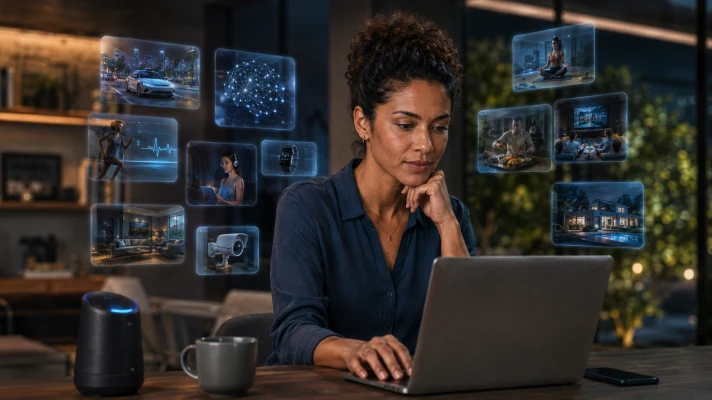
Today we pay for entertainment, cloud storage, applications and a growing collection of services. Tomorrow, recurring payments may support AI that works alongside us, health technologies, autonomous transport, personalised education and systems that run our homes. Some of the services involved may not even exist yet.
The number of subscriptions is only part of the issue. The deeper change happens when we become accustomed to what they provide.
For a business, selling a product once is useful. Becoming part of someone's daily infrastructure is far more valuable. Once a service supports the way you work and live, cancelling it is no longer a simple decision about an optional purchase.
YouTube Premium is a fairly harmless illustration: cancel it and I put up with advertisements and irritation. What happens when the subscription supports AI that makes my work several times more productive? Or a health technology that contributes to a longer, better life? Or a capability that, fifty or a hundred years from now, feels as ordinary as internet access does today?
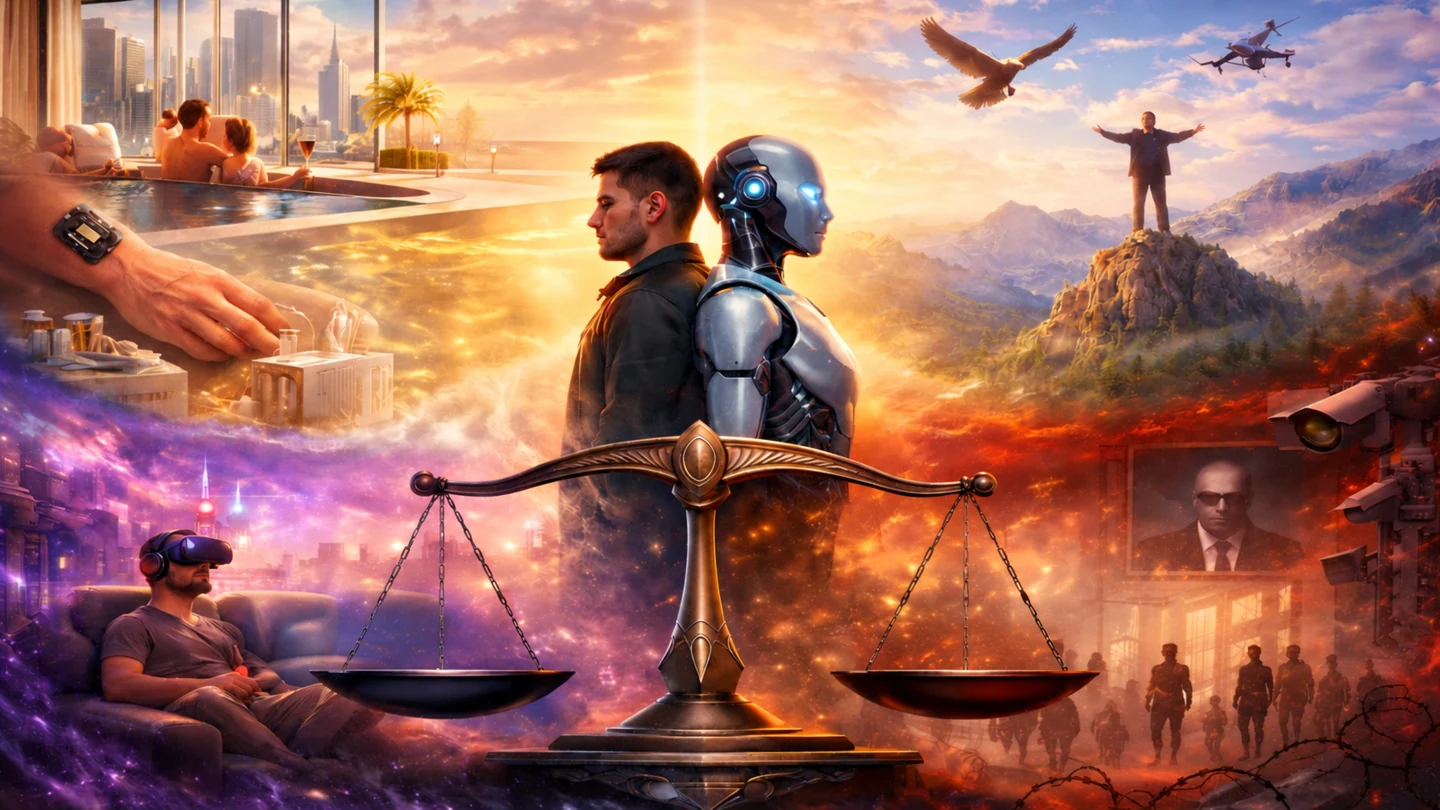
Black Mirror and other works of fiction have explored versions of this question. They once seemed distant. The underlying commercial logic already feels familiar.
I examine the broader direction of this change in Evolution without brakes: the last human decision.
Look at how quickly expectations are changing, and try to imagine what an average person a century from now might consider normal. Not luxurious. Normal.
Perhaps that person will live longer, enjoy better health, delegate much of their work to AI, travel in vehicles that drive themselves and live in a home that manages its own systems. They may have opportunities that seem like science fiction to us.
How many of those capabilities will require continuous payment just to keep up with the standard around them?
A person in that future might enjoy a better quality of life than today's billionaires while spending a lifetime paying for dozens, perhaps hundreds, of systems that make it possible.
That is the paradox: we may gain the best life humanity has experienced while giving up a substantial part of our time to keep paying for the life we have come to regard as ordinary.
Dependence, or a worthwhile exchange?
It is easy to describe this as becoming dependent on technology, corporations and subscriptions. I am not convinced the answer is that simple.
If AI saves me two or three hours every day and I willingly pay for it, perhaps I have bought more freedom. If a health technology allows me to live longer and better, payment alone does not establish that I have lost my independence.
The harder question arises when the choice remains available only on paper.
You can decline AI, but struggle to compete at work. You can reject a new health technology while people around you benefit from it. You can cancel the digital services, but the cost of doing so may be a life far below the standard your society now expects.
Nobody explicitly compels you. Yet how free is a choice when the price of saying no becomes prohibitively high?
There is another possibility. If these technologies make life healthier, longer, easier and less dominated by work than it has ever been, people may accept the terms willingly. They may see an opportunity rather than a restriction.
Perhaps we will eventually see two broad responses. Some will accept the systems, subscriptions and conditions because they believe the life they receive is worth the price. Others will protect as much independence as possible, even if that means giving up some of the convenience and capability most people take for granted.
The first group may say they bought freedom. The second may say they preserved it.
Both may be right.
Which choice feels closer to yours?
Related services: business consulting