In this article8 sections
The wrong assumption that creates resistance
When automation is mentioned inside a company, some employees immediately think about headcount reduction. Some managers, on the other hand, expect immediate cost savings. Both reactions are understandable, but they often miss the point. Business automation is not primarily about reducing the number of people. It is about reducing manual, repetitive and low-value work that consumes human time and energy.
If automation is communicated as a way to replace people, the organization will naturally resist it. Employees will experience it as a threat, not as a tool. Management may get formal acceptance, but not real adoption. Even the best technology will fail if the people who should use it do not trust the process.
A more mature approach is different. Automation should remove unnecessary manual steps, speed up information flow, reduce errors and allow people to focus on work that requires judgment, experience, client relationships and accountability. That is a healthier foundation for change.
Manual work is not the same as human work
It is important to distinguish manual work from human work. Manual work includes copying data, sending the same reminders, checking status, searching documents, moving information from one system to another, manually preparing reports and repeating administrative steps. Human work includes understanding context, handling exceptions, communicating, negotiating, making decisions and taking responsibility.
When this difference is not made, automation is misunderstood. If we say that we automate work, people may hear that we automate them. If we say that we reduce manual work, the message is more accurate and healthier. People should not be an expensive mechanism for copying, checking and retyping. That is work for the system.
In many companies, the best employees spend a large part of the day on activities that do not use their expertise. That is not only inefficient. It is demotivating. Properly introduced automation gives people more space to do the work they were hired to do.
Management must lead the message carefully
The way automation is presented often determines whether the project will be accepted or quietly resisted. If the first message is “we will reduce costs”, employees will close down. If the message is “we will remove manual work that slows you down”, the conversation opens.
This does not mean business outcomes are unimportant. Automation should bring efficiency, speed and better control. But the path to those outcomes does not need to be headcount reduction. Often the more valuable outcome is that the same team can handle more work, reply to clients faster, make fewer errors and have better visibility.
In that sense, automation is part of cultural change. It shows that the company does not want people to do more of the same, but to work smarter. This is close to the Positive idea that technology should serve people, not create additional pressure on them.
Where automation relieves employees the most
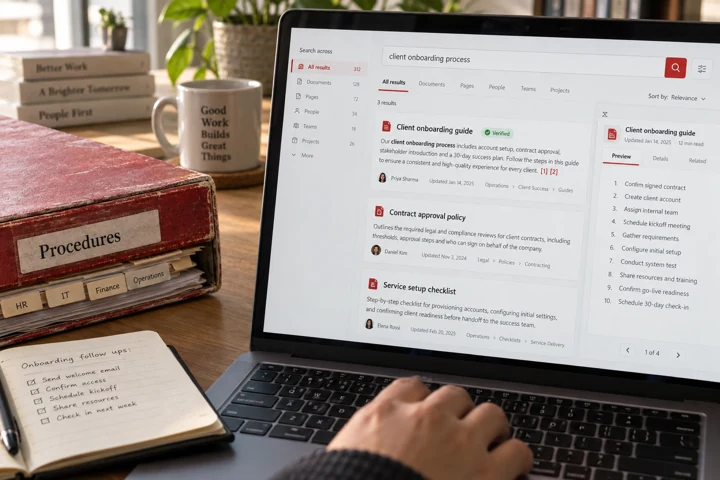
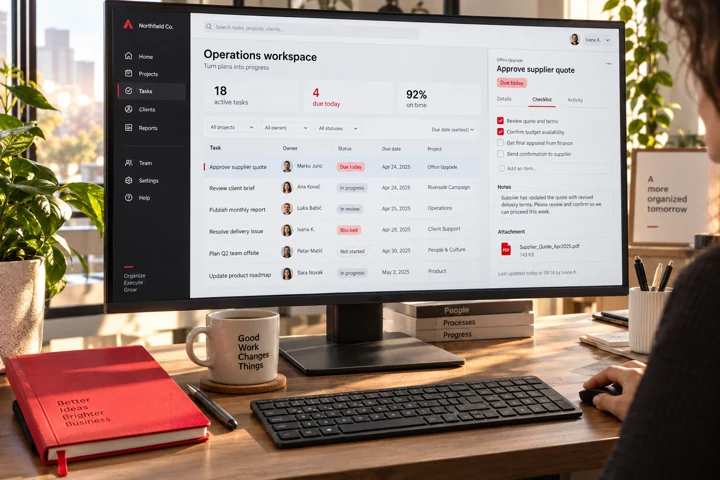
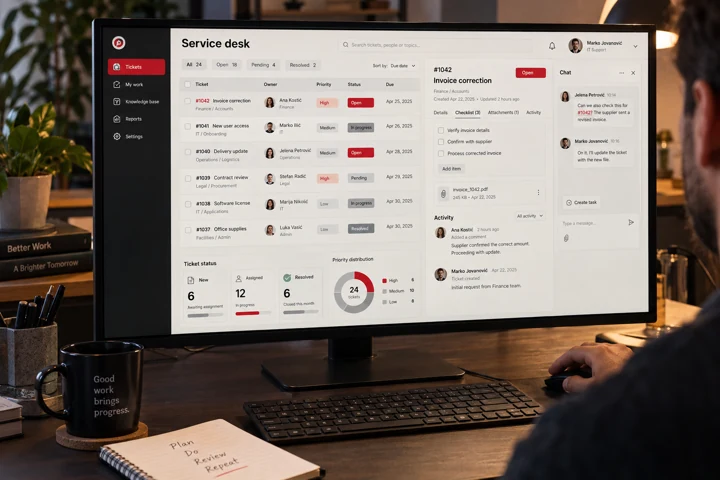
The biggest relief usually appears in frequent, administrative and repetitive processes. These may include internal requests, tickets, reports, meeting notes, approvals, procedure search, project status, client questions, document processing or preparing data for decisions.
For example, support employees should not manually search for the same procedural information again and again. Sales teams should not waste time repeating basic data if the system can prepare it. Management should not wait for manually prepared reports if data can be available through a dashboard.
This is where digital solutions, business software and AI can work together. Software creates structure, AI helps with knowledge and text, and the process defines the rules. When these layers are connected, employees spend less time in operational noise.
Automation does not remove accountability
One danger of automation is the false feeling that the system now does the job on its own. That is wrong. Automation can execute a step, suggest a response, send a notification or prepare a report. But accountability for the process must remain clearly defined.
Every automated process needs an owner. It must be clear who monitors quality, who handles exceptions, who changes the rules and who decides when automation is not enough. If this is not defined, automation can become a black box that nobody trusts.
A good system does not remove humans from all decisions. It includes them where they are most needed. Routine goes to the system. Judgment goes to people. This separation is essential for safe and sustainable automation.
How to know whether automation is well designed
Well-designed automation is visible in the way employees describe what became easier. If people do not see practical value in daily work, the project will struggle to live. If management does not see measurable effects, the project will not gain support for scaling.
Both human and business effects should be measured. Human effects include less manual work, fewer interruptions, less searching and less frustration. Business effects include faster response, fewer errors, better visibility, shorter processing time, greater team capacity and higher consistency.
If automation brings only another screen, another input field and another obligation, it has failed. If it removes repetition and increases clarity, it makes sense. That is a simple but important test.
Why this matters for employee retention
Companies often talk about retaining good people while at the same time burying them in manual, repetitive and administrative work. People with knowledge want to use that knowledge. If most of the day is spent copying, checking and waiting, motivation drops.
Automation can be part of the answer. Not because it is modern technology, but because it shows that the company respects the time and attention of its people. When employees see that technology is introduced to help them, not replace them, change becomes much easier.
This is especially important in growing companies. Growth brings more requests, more communication, more data and more operational pressure. Without automation, the same team begins to break under the load. With smart automation, the same team can handle more work without proportional growth in chaos.
Less manual work, more human value
The best automation is not the one that removes people from the company. It is the one that returns people to work that truly requires humans: decisions, relationships, creativity, accountability, client understanding and situations that cannot fit into a simple rule.
If you want to introduce automation without fear and resistance, start with the message and the process. Do not ask first whom technology can replace. Ask which manual work slows people down the most and how the system can relieve them. That is where healthy digital transformation begins.
Frequently asked questions
Does business automation mean reducing employees?
Not necessarily. Automation usually means reducing manual and repetitive work, while people remain essential for decisions, exceptions, communication, creativity and accountability.
Why do employees resist automation?
Because automation is often perceived as a threat. If management does not explain that the goal is relief from manual work rather than replacement, resistance is expected.
Which manual work should be reduced first?
Start with work that repeats often, consumes time, easily causes errors and does not require expert judgment. Examples include status checks, reminders, reports, data copying and information search.
How can human accountability remain in an automated process?
Every automated process needs an owner, rules, exceptions and a clear point where a person becomes involved. Routine can go to the system, but accountability must remain clear.
How should automation be communicated to employees?
Explain what changes, why it changes, what becomes easier and how employees benefit. The message should focus on relief and better work, not threat or control.