In this article8 sections
Order in business does not happen by itself
When a company is small, many things can be managed verbally, through messages, spreadsheets and informal agreements. People know each other, information moves quickly and a manager can often personally follow most important activities. The problem starts when the organization grows.
The number of clients, tasks, requests, projects, employees and decisions increases. What once worked as a quick agreement becomes a source of delays. At that point, business software is no longer a matter of comfort. It becomes a matter of management.
Good business software does not solve everything by itself. But it can bring order where there is already a business logic that needs to be standardized, connected and made visible.
What order in everyday work really means
Order does not mean bureaucracy. It means knowing where a request enters, who owns it, what status it has, what the deadline is, where the documents are, where the communication history is and how management can see what is happening.
In practice, order is visible through simple things. Tasks have owners. Tickets have statuses. Projects have phases. Clients have history. Documents have a place. Reports are not built manually every time. Meetings end with clear obligations.
Without this, a company can have a lot of activity but little management. People are busy, but priorities are unclear. Information exists, but it is not accessible to the people who need it.
How business software changes the way work is managed
The first change is centralization. Business software introduces one or several clearly defined places for key workflows. This does not mean removing all other tools. It means defining where the operational truth lives.
The second change is standardization. Without a system, each team often works in its own way. One team tracks tasks in spreadsheets, another through messages, a third through email. Standardization sets minimum rules so the company can operate as an organization, not as a collection of individual habits.
The third change is visibility. When data is in the system, it is easier to see where work stands. Management no longer has to wait for manually prepared reports from several sources.
Software cannot create order if processes are unclear
Software cannot magically organize a company that does not know how it wants to work. If rules are unclear, the system will simply digitize ambiguity. If ownership is unclear, the tool will not solve it. If status definitions are unclear, the tool will store confusion in a cleaner interface.
That is why a good business software project begins with questions: which process are we trying to improve, what is the input, what is the output, who is responsible, what information is needed, what should be measured and what should be automated?
This is why Positive connects digital solutions with business consulting. Software introduced without process understanding can become another tool. Software introduced with process insight can become a foundation for scale.
Which areas most often need to be connected
The first area is sales. CRM is not just a contact database. It should show who is communicating with a client, what stage an opportunity is in, what the next step is and where sales opportunities are being lost.
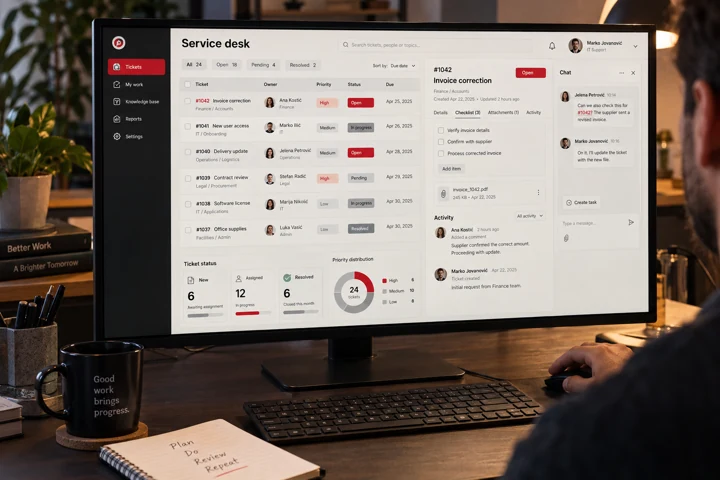
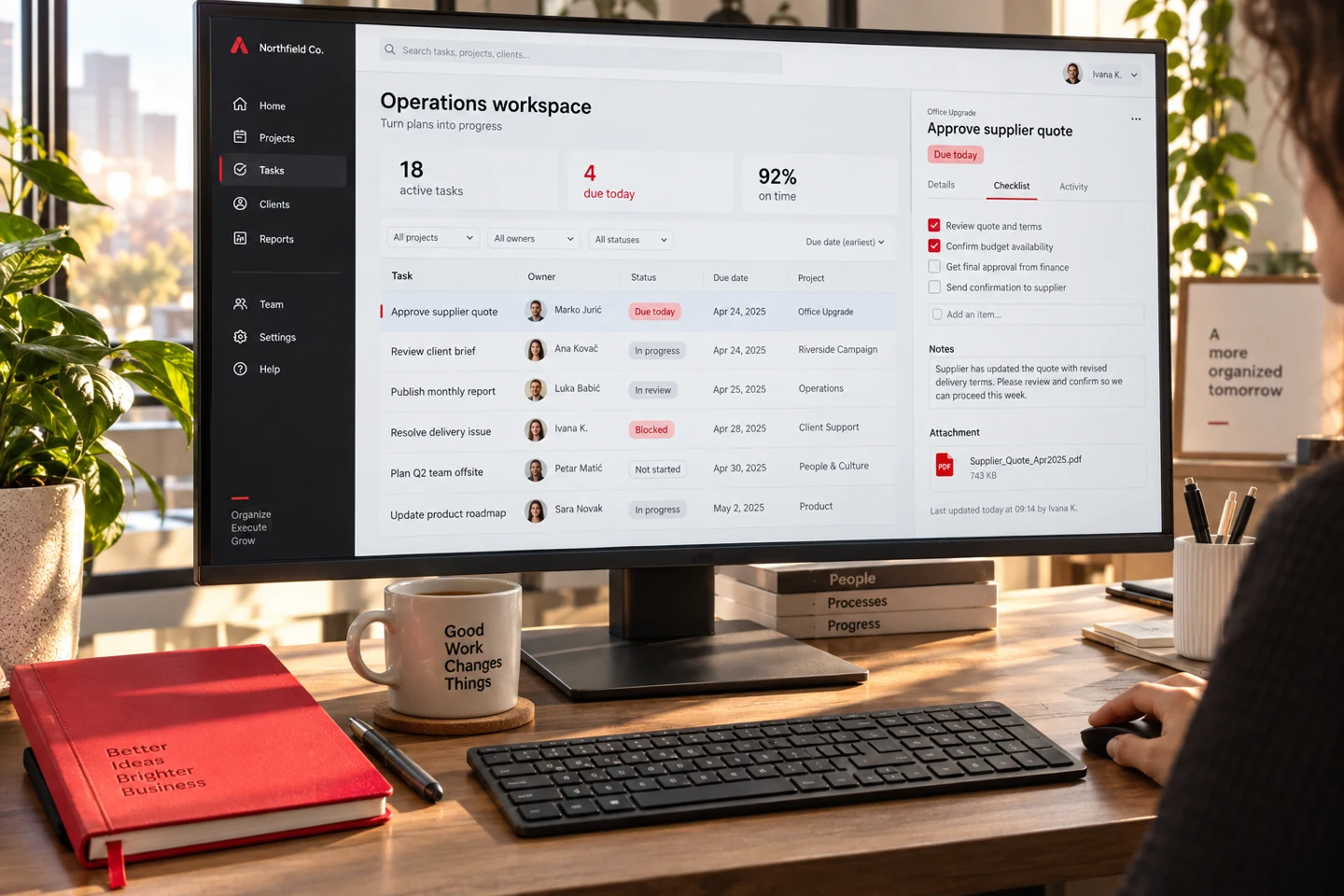
The second area is tasks and internal requests. When employees do not know where to submit a request, who owns it or when it will be resolved, work becomes invisible. Ticketing and task management help requests stay visible and accountable.
The third area is projects. Projects require deadlines, phases, dependencies, documents, decisions and records. If projects live only in meetings and messages, it is difficult to know what is truly delayed and why.
The fourth area is reporting. BI and dashboards only make sense when underlying processes produce reliable data.
How to know it is time for business software
It is time when management can no longer get a quick and reliable view of work. It is time when the same questions keep circulating: what is the status, who owns it, where is the document, why is it late, what was agreed and what is the next step?
It is also time when growth starts creating additional chaos. More people do not automatically mean more capacity if the operating system is not clear. Without a system, growth often increases coordination problems.
Still, implementation should not be rushed without a plan. The right approach is to choose one or several high-impact processes, organize them, implement software, measure the effect and then expand.
What successful implementation looks like in phases
A successful business software implementation does not need to start as a large project. It is often better to start with one area where the pain is most visible, such as sales, internal requests, project tracking, documentation or reporting. The goal of the first phase is not a perfect system, but proof that a more structured way of working creates practical value.
The second phase is connection. When one process starts producing better data, it becomes logical to connect it with other processes. For example, a sales opportunity can become a project, a project can create tasks, tasks can feed reports and reports can help management see bottlenecks.
The third phase is automation. Only when processes have enough structure does it make sense to automate reminders, approvals, reports, notifications or data preparation for AI assistants. Automation should not cover disorder. It should accelerate what is already logically organized.
The Positive approach
Positive does not treat business software as an isolated application. It is part of a wider business ecosystem that can include processes, data, AI assistants, IT infrastructure and security. If these layers are not connected, the company gets individual solutions. If they are connected, it gets a working system.
Within the Positive ecosystem, PAM and ONE logic serve as an operational layer that helps companies see tasks, tickets, projects, clients and reports more clearly. This is not only software implementation. It is clearer business discipline.
If your company is growing but visibility is not growing with it, it is a good moment to start the conversation. The first question is not which software to buy. The first question is which part of the business must become more visible, measurable and less dependent on improvisation.
Frequently asked questions
Can business software solve chaos by itself?
No. Software helps when processes, owners and work rules are clear. Without that, it can only digitize existing chaos.
Which process should be digitalized first?
Start with processes that affect clients, deadlines, revenue, internal requests or management decisions.
Is business software only for large companies?
No, but it brings the most value to companies with enough complexity: multiple teams, processes, clients and a need for visibility.
How can employee resistance be reduced?
The system should reduce searching, reminders and manual work instead of adding administration.
How does Positive approach implementation?
Positive first understands the process and business goal, then proposes a digital solution that fits the company’s real way of working.